When you're screening heat pump suppliers for the European market, facing quotes from China, Turkey, Southeast Asia and beyond, the most common question is probably: "The prices are similar — who should I choose?"
As a manufacturer with over two decades in the heat pump industry, we'd like to talk about a dimension that's often overlooked but critically important: certification systems and manufacturing standards.
This isn't an ad. It's a sourcing reference.
Through 2025 and into 2026, several clear trends are shaping the landscape:
Subsidy programs keep expanding across Europe — Germany's BAFA, France's MaPrimeRénov', Italy's Ecobonus — nearly every major market offers financial incentives for heat pump products. Energy efficiency requirements are getting tighter too, with updated ErP/Ecodesign regulations demanding higher standards on SCOP, noise levels and refrigerants. And end users are becoming increasingly knowledgeable — they actively check EPREL energy labels, look up refrigerant types, and compare noise decibel ratings before making a purchase.
The bottom line: if your supplier can't provide complete CE and ErP documentation along with EPREL registration numbers, your products may not even make it to market.
In the inquiries we receive from European clients, the most frequently requested certifications include:
CE — the basic safety and compliance requirement across the entire EU.
ErP (Ecodesign) — covering energy efficiency indicators and eco-design requirements.
EPREL — the EU database registration for energy labels, mandatory for placing products on the market.
Keymark — a third-party certification required for subsidy eligibility in several European countries.
MCS — mandatory for UK government schemes like the Boiler Upgrade Scheme.
BAFA — a prerequisite for applying for German subsidies.
Q-LABEL — a quality mark that builds trust with end users.
A real example from 2024: a client from Poland was comparing five suppliers and eventually chose us. His words: "You're the only ones who could provide Keymark, MCS and BAFA documentation all at once. The others either said 'we're applying' or didn't even know what these were."
Many Chinese exporters can provide a CE certificate. But here's the thing:
CE is the minimum requirement. If your product needs to qualify for BAFA subsidies in Germany or go through the MCS certification route in the UK, CE alone won't get you there.
We tracked this over 2024-2025: more than 60% of the certification-related requests from our European clients involved CE plus ErP plus at least one third-party certification such as Keymark, MCS or BAFA.
This isn't a coincidence. For end users, subsidies directly drive purchasing decisions. And subsidies require products to pass specific certification systems.
Behind every certification is the testing capability behind it.
Many smaller heat pump factories don't have their own performance testing labs and rely entirely on third-party sample testing. That means longer R&D cycles, inconsistent product quality, and higher batch-to-batch variation.
AMITIME currently operates 35 professional heat pump laboratories, including:
16 TUV-standard testing laboratories
12 long-term endurance testing laboratories
Testing capacity covering units up to 300kW
Ambient temperature testing range from -45°C to 85°C
A dedicated -45°C ultra-low temperature lab that simulates real extreme climate conditions
These labs operate to TUV and Intertek international certification standards. Every unit we ship has been tested to the same standards used by the certification bodies themselves.
Beyond product certifications, a factory's management system certifications tell you a lot about its long-term reliability.
We hold ISO9001 (Quality Management), ISO14001 (Environmental Management), and ISO45001 (Occupational Health and Safety) certifications.
Why does this matter? For long-term OEM/ODM partnerships, product certifications are your entry ticket, but management system certifications determine how far you can go. A factory without ISO9001 is unlikely to have reliable consistency control in mass production.
With the EU F-Gas regulations continuing to tighten, R290 (propane, GWP=3) has become the mainstream choice in the heat pump industry.
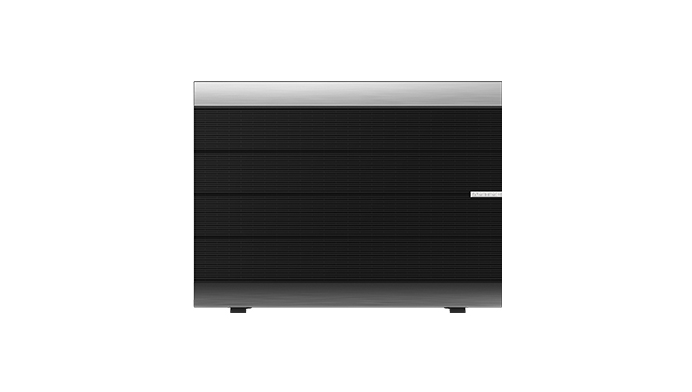
All our main product series — EcoSTAR Pro, EcoLITE, PowerSTAR+, AquaSTAR and AeroSTAR — have fully transitioned to R290 refrigerant. For safety, we use a multi-layer mechanical safety protection system. All safety components are purely mechanical, meaning they continue to function even during a power outage or control system failure.
This isn't a "bonus feature." It's the baseline.
Certifications prove compliance. But what end users really care about is: how much will I save? How noisy is it? Will it keep me warm in winter?
Here's what we've measured in our European-standard lab tests:
EcoSTAR Pro (residential heat pump)
SCOP up to 5.62 at 35°C
Energy class A+++ at both 35°C and 55°C
Sound pressure level as low as 36 dB(A) at 1 meter
Operating range from -25°C to 43°C
Maximum water outlet temperature of 75°C
EcoLITE (cost-effective residential heat pump)
SCOP up to 5.19 at 35°C
Energy class A+++ at both 35°C and 55°C
Sound power level as low as 50 dB(A)
Operating range from -25°C to 43°C
PowerSTAR+ (commercial heat pump)
SCOP up to 5.22 at 35°C
Energy class A+++ at both 35°C and 55°C
Operating range from -25°C to 43°C
Supports cascading up to 15 units
AquaSTAR (heat pump water heater)
Annual COP of 3.8
Energy class A+
Tank capacity from 80 to 300 liters
Cools the room while heating water — two functions in one unit
If you're evaluating heat pump suppliers for the European market, these four questions can help you quickly separate the serious manufacturers from the rest:
"Can you provide complete CE and ErP documentation, along with EPREL registration numbers?" — A supplier who answers this confidently has real export experience.
"Are your Keymark, MCS or BAFA certifications registered under your own factory name, or borrowed from a trading company?" — Factory-owned certifications show long-term commitment.
"Do you have your own performance testing laboratory?" — Factories with their own labs typically have more reliable quality control.
"Do you have local service support in Europe?" — We maintain a representative office in Spain and offer remote monitoring and diagnostics, which makes a real difference for European clients.
AMITIME was founded in 2003. We operate three production bases across Zhongshan (China), Foshan (China) and Istanbul (Turkey). Our team of over 800 includes more than 20% engineers and technical staff. We export to over 80 countries and work with more than 2,000 partners worldwide.
We're not the only option out there. But we believe that a solid certification system, real testing capability, and transparent technical specifications are the most reliable foundation for a long-term partnership.
If you're looking for a heat pump partner, we'd be happy to hear from you.


 English
 Deutsch
 français
 Español
 italiano
 Türkçe
 Svenska
 Afrikaans
 русский
 العربية
 日本語
日本語